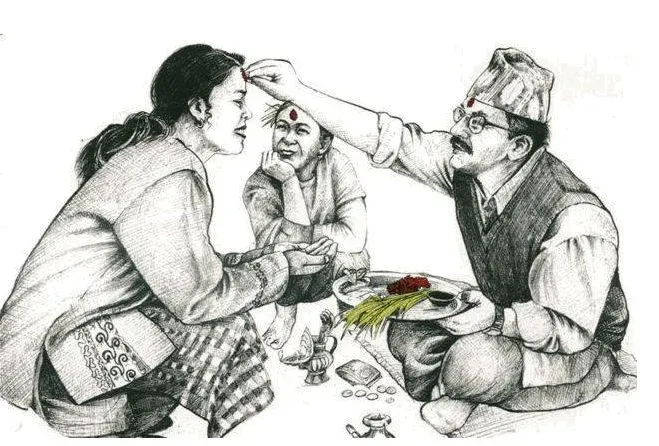
Most travellers cross Naghal without ever knowing it. It's a narrow lane tucked just southeast of Kathmandu Durbar Square, between the old palace and the crowded maze that leads down towards Bishnumati. Street dogs sleep in the middle of it. Old women shell peas on the doorstep. A bicycle bell rings every few minutes. It doesn't announce itself.
And yet, this quiet lane has quietly served one purpose for centuries: making teeth. Gold teeth. Ceremonial teeth. Ordinary teeth. Whole generations of Kathmandu families have walked into Naghal on the morning of a wedding, a bratabandha, or a big festival, and walked out with something changed inside their mouth.
In the Newar community, gold teeth weren't just decoration. They were status, blessing, and memory. A bride's gold tooth was part of her dowry. A grandfather's was part of his story. The craftsmen in Naghal made them by hand, one at a time, on small charcoal fires.
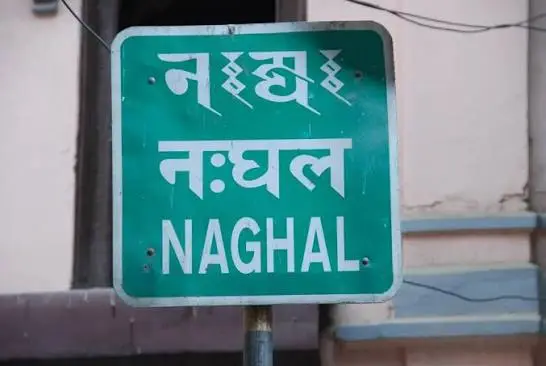
A Craft Older Than Memory
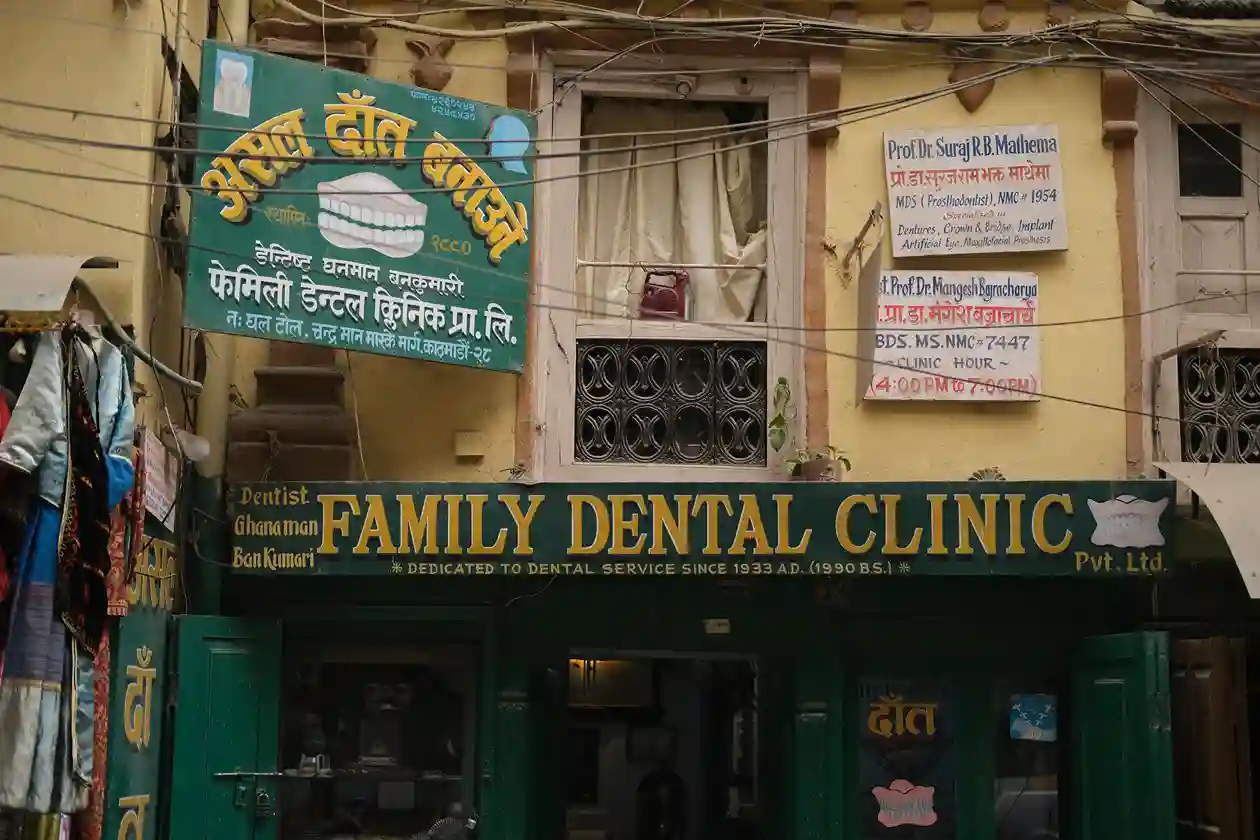
The craft is goldsmithing, but of a very specific kind. It's closer to dentistry than to jewellery. Tooth-makers in Naghal learnt their trade from their fathers, who learnt it from theirs. There's no school for this. You sit next to someone, watch, and eventually start making your own.
The work itself is delicate. A tooth has to fit an actual mouth. It has to survive decades of chewing, laughing, and being worn down by rice and tea. It has to look beautiful without looking fake. The old tooth-makers could tell a person's age, diet, and even general health just by looking at the shape of their jaw.
In the golden age of the trade, this street was loud. Every household had a small forge. Small hammering sounds drifted into the lane from morning until evening. Customers waited on wooden benches outside, chatting with neighbours.
The God Who Watches Over Toothache
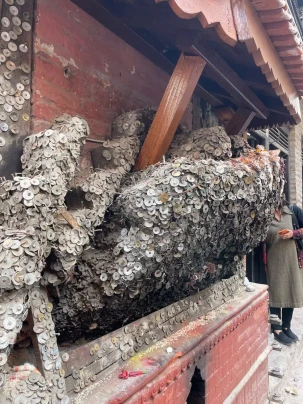
Walk a little further down the lane, and you arrive at one of the strangest and most beloved shrines in Kathmandu: Baishyadev, the Toothache God.
The story goes that a man once suffered from unbearable tooth pain. In desperation, he drove a coin into the wall of the shrine with a nail, promising the god he would return if the pain went away. It did. So he came back. Others followed. Now the shrine's walls and the surrounding stone are covered in hundreds of coins, each one nailed into place by someone who came looking for relief.
It sounds like folklore, but it's very real. For generations, people from across Kathmandu have come to Baishyadev with toothaches, and left a coin behind as thanks or as a request. The coins are still being nailed in today. If you stand there quietly for a few minutes, you'll often see someone doing it.
This is the other half of Naghal's story. The street makes teeth. The shrine heals them. Between the two, you get a complete picture of how Kathmandu has always treated the mouth: with craft, with faith, and with a little bit of both.
The Slow Fade
Modern dentistry changed everything. Metal-free crowns, ceramic veneers, and cheap imports from abroad made the traditional gold tooth cheaper to replace than to make. Younger Newar families stopped asking for handcrafted teeth. The old craftsmen stopped training apprentices.
Today, only a handful of tooth-makers are still active in Naghal. The forges that used to burn year-round now light up only for special commissions. A bride's request. An old man's replacement. A museum piece. Or a curious visitor who wants something made the old way.
But the street itself hasn't given up. If you walk slowly, you can still see the old shopfronts. Family names in Devanagari script above wooden doors. Tiny display cases with a single gold tooth lit inside, like a small jewel.
How to Walk It
Naghal is not a tourist site. There are no signs, no entrance fee, and no guide waiting at the corner. It rewards the visitor who comes with patience, curiosity, and an interest in looking rather than buying.
The lane sits between Durbar Square and the older Newar neighbourhoods to the south. It takes less than five minutes to walk end to end. The best time is between 10 AM and 4 PM, when the shops are open and the light falls into the lane in a soft, dusty way.
Walk quietly. Say hello if someone greets you. If a craftsman is working, stand outside the doorway, watch for a moment, and only step in if invited. This is someone's home, not an exhibit.
There's one more thing worth knowing. Just past the shrine, the lane opens into a small courtyard with an old statue of Shiva that has stood there for centuries. If you were a child growing up in this part of Kathmandu, this courtyard was likely your playground. It still is for the kids who live here now. The lane doesn't end at the tooth-makers or the shrine. It ends wherever the old city decides to take you next.
Where We Fit In
We pass through Naghal on our Free Walking Tour Kathmandu, after Durbar Square and before the quieter Newar courtyards. It's one of the stops our guests remember most, not because it's grand, but because it's real. The tooth-makers, the shrine, the coins, the quiet courtyard with the old Shiva statue. None of it is staged.
That's what makes Naghal important to the walk. It's the point where the tour stops being about monuments and starts being about how people actually live in this city. If you'd like to walk this street with someone who grew up in these alleys, come along one morning.
For most visitors, Naghal is just a lane. For Kathmandu, it's a memory of a time when a single tooth could carry a family's story for three generations.
This is a street best walked slowly, with a guide who knows the families who live along it. If you'd like to see Naghal for yourself, come along on one of our free walks.
We run cultural walking tours and heritage site visits rain or shine. Kathmandu Durbar Square, Boudhanath, Pashupatinath, the old city markets. All accessible, all safe, all worth seeing.
Get in touch on WhatsApp or email if you'd like to join a walk or plan a custom Kathmandu Valley day.
See you on the walk. Kathmandu rewards the slow visitor.
Tour conditions and schedules can change. Always confirm details with us before you join.