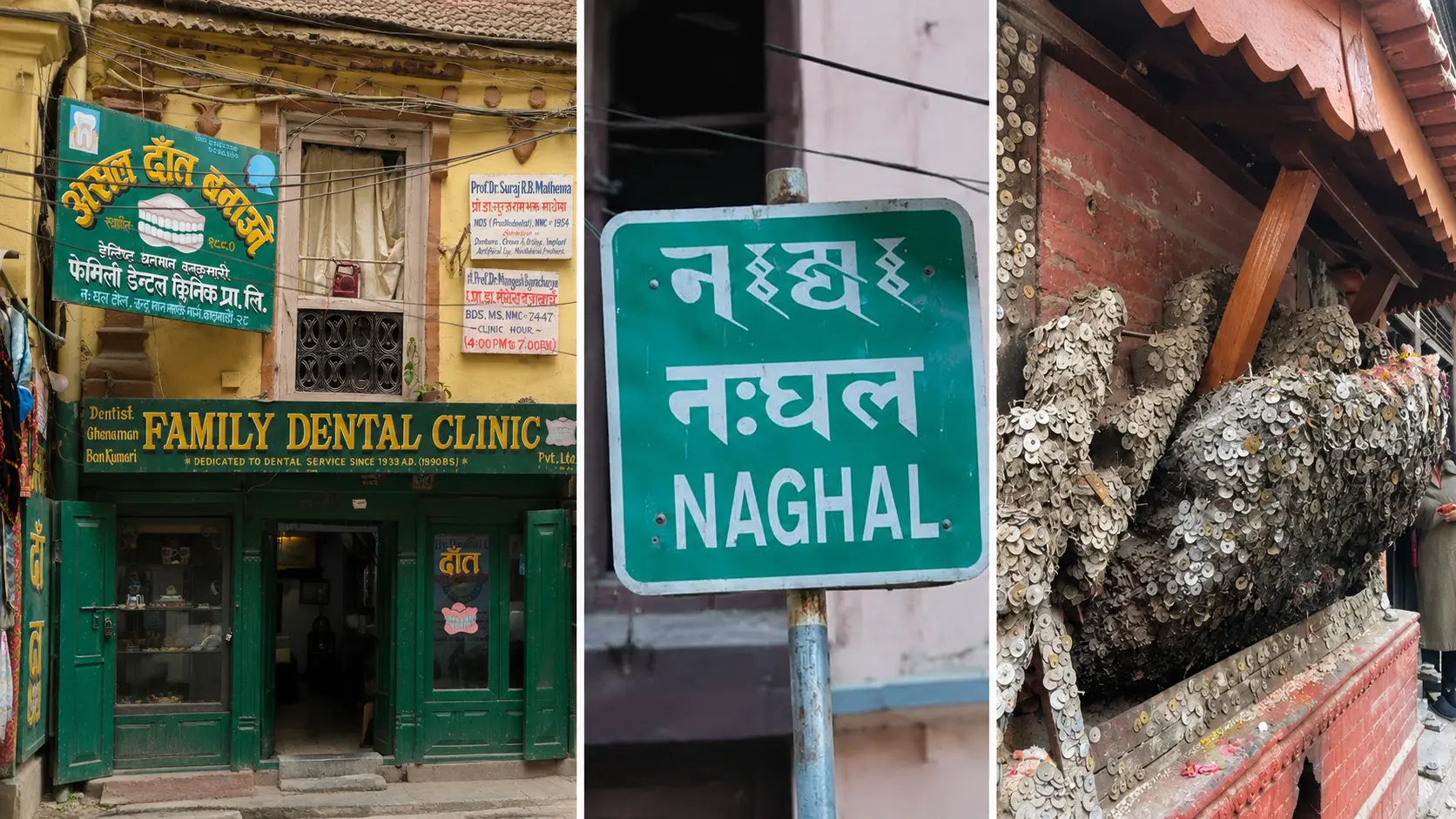
If you're in Nepal during Dashain, you're going to notice something strange.
Kathmandu, normally a chaotic city of honking horns and crowded streets, starts to quiet down. Shops close. Offices empty. And then, if you head out to the villages or even just walk through the older neighborhoods, you'll see something else entirely: bamboo swings the height of three-story buildings, kites filling the sky, and families gathered in courtyards with red tika smeared across their foreheads.
This is Dashain. And if you're here for it, you've stumbled into the single best window to understand what makes Nepal tick.
What Is Dashain, Actually?
Dashain is Nepal's longest and most important Hindu festival. It runs for 15 days, honoring the goddess Durga and her victory over the demon Mahishasura, a story of good triumphing over evil that shapes almost everything you'll see during this period.
But calling it "a religious festival" undersells it. Dashain is closer to a national homecoming. It's the one time of year when everyone, from Kathmandu office workers to Nepalis living abroad, makes the journey back to their ancestral villages and family homes. Think Christmas, Thanksgiving, and a summer reunion rolled into one, stretched across two weeks.
The Nepal Tourism Board describes it simply: "a time for family reunions, exchange of gifts and blessings, and elaborate pujas." That's the official version. The lived version involves a lot of goat curry, card games, and kids running wild with new clothes.
The Days That Actually Matter
Dashain runs for fifteen days, usually from late September into October, with the exact dates shifting each year based on the lunar calendar. Most of the first week is quiet. Families plant jamara (barley shoots) in a dark room on day one, and life mostly continues as normal.
The days you actually want to plan around are these:
Phulpati
Sacred flowers and banana stalks travel from Gorkha to Kathmandu's Hanuman Dhoka in a formal procession. This is when the festival energy becomes visible across the city. It's also the first day most offices and businesses close.
Maha Ashtami
Temples dedicated to Durga get busy from early morning. This is one of the two main days for animal sacrifice, alongside Maha Navami. It can be intense to witness if you're not prepared for it.
Maha Navami
The Taleju Temple in Kathmandu Durbar Square, normally closed to the public, opens for this one day only. Large-scale sacrifices happen at Hanuman Dhoka. This is also the day mechanics, drivers, and craftspeople worship their tools and vehicles as part of Vishwakarma Puja.
Vijaya Dashami
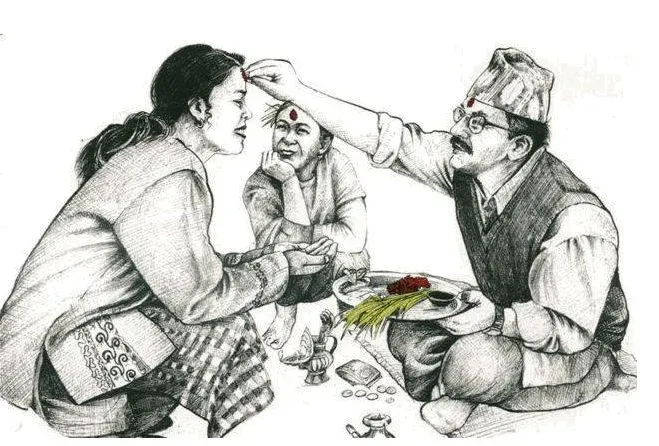
This is the day everyone plans around. Elders apply tika, a mix of rice, yogurt, and red vermilion, on the foreheads of younger family members, along with jamara tucked behind the ear. It comes with a blessing and often a small amount of money. Families that have been apart all year make a point of gathering for this alone.
Kojagrat Purnima
The festival closes on the full moon. Tradition holds that the goddess Laxmi rewards anyone who stays awake through the night.
What You'll Actually See
Dashain isn't something you observe from a distance. It happens in the streets, on the rooftops, and in the courtyards of the old city. Here's what you'll actually encounter.
The Kites
From the first days of the festival, Kathmandu's sky fills with kites. Not a few here and there, but hundreds, launched from rooftops across the city. Kids and adults alike stand on terraces, strings in hand, trying to cut each other's kites out of the sky. It's one of the most photogenic parts of the festival, and it's everywhere.
The Swings
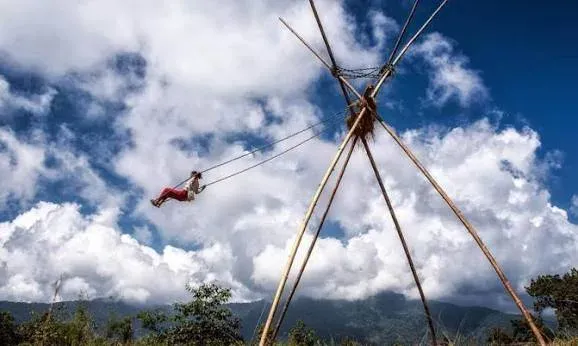
In villages and older neighborhoods, communities build bamboo swings, some simple, some towering 20 feet or more. "Linge Ping" is the traditional rotating swing, and watching (or trying) one is a genuine Dashain experience.
The Tika
If you're invited into a Nepali home during Dashain, you'll likely be offered tika. An elder will press a thumbprint of red rice-yogurt paste onto your forehead, tuck jamara behind your ear, and give you a blessing. It's a genuine honor, and accepting it graciously is the right response.
The Sacrifices
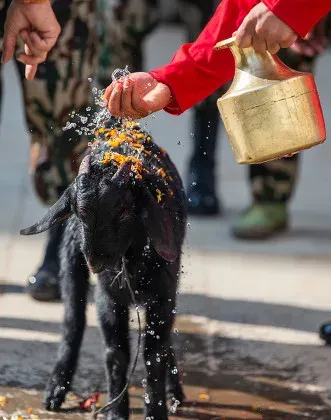
This is the part that surprises some travelers. Animal sacrifice is an integral part of Dashain rituals at temples across Nepal. On Maha Ashtami and Maha Navami, buffaloes, goats, and other animals are sacrificed at Shakti Peeths, especially at Hanuman Dhoka in Kathmandu. It's a religious practice with deep roots, not a spectacle. If it's not something you want to witness, simply avoid the major temple areas on those days.
What Tourists Should Know Before You Go
Kathmandu will be quieter than usual, and that's a good thing. Here's the counterintuitive part: while roads leaving Kathmandu get packed as people head home, the city itself empties out. Many shops and restaurants in tourist areas stay open, but the usual crowds thin significantly. If you've been in Kathmandu for a while and found it overwhelming, Dashain is when you get the city to yourself.
Banks and offices close, so carry cash. The government declares roughly five days of public holidays around Dashain. Banks, government offices, and many businesses close or operate on reduced hours. ATMs can run out of cash. Plan ahead and carry enough rupees for a few days.
Domestic travel gets busy. If you're planning to fly to Pokhara or Lukla, or take a long-distance bus, book early. This is peak domestic travel season. Roads get congested as hundreds of thousands of Nepalis travel to their home districts.
Trekking is still possible. Dashain doesn't shut down the trails. October is actually one of the best months for trekking, with clear skies, stable weather, and excellent mountain views. But some guides, porters, and teahouse staff may take leave to be with their families. Arrange your trek logistics in advance.
Pokhara hosts its own celebrations. If you're in Pokhara during the final days, the city often hosts a Dashain Tourism and Cultural Festival at Barahi Ghat in Lakeside. Tourists are welcomed with tika and jamara, and there's a kite-flying competition, traditional cultural performances, and local food. It's specifically designed for visitors to experience Dashain firsthand.
Etiquette: How to Be a Good Guest
Dashain is a family and religious festival, not a tourist attraction. A little awareness goes a long way.
- Dress modestly if you're visiting temples or family homes.
- Ask before photographing rituals, especially animal sacrifices or private family moments.
- If offered tika, bow your head slightly and accept it. It's a blessing, not a performance.
- Don't refuse prasad (blessed food) if it's offered. A small bite is enough.
- Some temple areas are closed to non-Hindus or to visitors entirely during certain rituals. Respect the signs and the crowds.
Frequently Asked Questions
When is Dashain?
Dashain runs for fifteen days each autumn, usually from late September into October. The exact dates shift year to year based on the lunar calendar. The main Tika day, Vijaya Dashami, is the one most travelers plan around.
What is the main day of Dashain?
Vijaya Dashami is the most important day. This is when families gather for the tika ceremony, with elders blessing younger relatives with red tika, jamara, and often a small gift of money.
Is Dashain a good time to visit Nepal?
Yes, with some planning. October is one of the best months for trekking, and the festival offers a unique cultural experience. Just be aware that domestic travel is busy, some businesses close, and you should book logistics in advance.
Can tourists participate in Dashain?
Absolutely. If you're invited into a home for tika, it's a genuine honor. Many Nepalis welcome foreign guests during the festival. Just be respectful, dress modestly, and follow your host's lead.
Do I need a guide to experience Dashain?
Not strictly, but it helps enormously. The rituals, the processions, the symbolism of tika and jamara, none of it is obvious just from watching. A local guide can explain what you're seeing and help you find the best vantage points.
Where We Fit In
Our Free Walking Tour Kathmandu runs through the old city, across Durbar Square, Asan, and Indra Chowk, the exact streets where Dashain's biggest public celebrations happen. If you're in Kathmandu during the festival, we can help you navigate the crowds, understand the rituals, and find the moments most tourists miss.
Dashain is best experienced with someone who grew up with it. If you'd like to walk the old city during the festival, come along on one of our free walks.
We run cultural walking tours and heritage site visits rain or shine. Kathmandu Durbar Square, Boudhanath, Pashupatinath, the old city markets. All accessible, all safe, all worth seeing.
Get in touch on WhatsApp or email if you'd like to join a walk or plan a custom Kathmandu Valley day during Dashain.
The festival only comes once a year. If you're here for it, walk it with us.
Dates and schedules are subject to change. Always confirm current details with local authorities or your guide before making plans.